Cricket Non-Striker Run-Out Rules: what Law 38 says
On this page6
TL;DR: A non-striker can be run out when out of their ground and the wicket is fairly put down while the ball is in play, subject to the current wording and the withdrawal provisions in MCC Law 38. It is a run-out dismissal, not a separate informal rule.
This explainer uses the Laws of Cricket and current playing-condition sources. It describes the decision a reader needs to understand, but it is not a substitute for an umpire’s live ruling.
What is the short answer?
A non-striker can be run out when out of their ground and the wicket is fairly put down while the ball is in play, subject to the current wording and the withdrawal provisions in MCC Law 38. It is a run-out dismissal, not a separate informal rule.
The table gives the decision points to check before applying a general explanation to a specific format.
| Decision point | What to check | Why it matters | Safe action |
|---|---|---|---|
| Ground | The non-striker is outside the crease | Position at the instant matters | Check Law 38 |
| Ball | The ball is in play | Dead-ball status can change the outcome | Use the full Law |
| Wicket | The wicket is fairly put down | The correct end and process matter | Follow the umpire decision |
| Withdrawal | The fielding captain may withdraw an appeal | Spirit of Cricket and Law are distinct | Report both facts |
Which Law or playing condition applies?
The source panel starts with MCC or ICC material because those documents define the base framework. Domestic, franchise and school competitions can add playing conditions, so readers should open the current document for the match they are watching or scoring.
What mistake do beginners make?
They turn a short phrase into a universal rule. A free hit, a leg bye, a boundary catch or a timed-out decision depends on the ball status, the format and the exact wording of the Law.
How should an umpire or scorer record it?
Use the official signal, the correct dismissal or extras label and the competition’s scoring procedure. If a replay is involved, record the final decision rather than an early broadcast description.
What should be reviewed before the next season?
Recheck the MCC Law, the ICC or board playing conditions and any relevant clarification. A routine source check can update verification metadata without changing the article date unless the explanation itself changes.
Frequently asked questions
Does one format’s rule apply everywhere?
No. The Laws provide the base, while playing conditions can change details by format or competition.
Can a video clip prove the decision?
It can provide context, but officials apply the current Law and review protocol.
Are all runs scored in the same way?
No. Bat runs, extras and penalty runs have different definitions and signals.
Should a player rely on this during a match?
Use the officials and the published playing conditions for a live decision.
When should the page be checked again?
After an MCC Law update, an ICC or board playing-condition change, or a material clarification.
Bottom line
Cricket rules become clearer when the reader identifies the ball status, the exact Law and the competition’s current playing condition. That is safer than relying on a short social-media explanation.
Related SportsMuntra reading
Frequently asked questions
What is the short answer?+
A non-striker can be run out when out of their ground and the wicket is fairly put down while the ball is in play, subject to the current wording and the withdrawal provisions in MCC Law 38. It is a run-out dismissal, not a separate informal rule.
Why can the answer differ by competition?+
Playing conditions can add, remove or clarify details around a general Law. The article names the format and points readers to the current official document.
Which source should readers check first?+
Start with the governing body or organiser source listed in the source panel, then check its publication date and competition scope.
Can a search snippet settle a decision?+
No. Search results establish intent. The umpire, organiser and current Laws or playing conditions decide the match.
When should this page be reviewed?+
Review it after an official Law, playing condition, ownership, payment formula or source changes, and at the stated editorial cadence.
Does this page replace professional advice?+
No. Use the qualified official, coach, scorer, tax adviser or ticket provider for a live decision.
Sources
Related rules & terms guides
View all →
Cricket Short-Run Rules: what happens when a batter turns early
A short run occurs when a batter fails to make good the ground while turning for another run. The umpire can disallow the short run, and deliberate short running can trigger the additional penalty described in the Laws.
Cricket Timed-Out Rules: the incoming batter deadline
Under MCC Law 40, the incoming batter must be ready within the stated time after a wicket or retirement unless time has been called. The competition's playing conditions can set the exact period, so readers should not copy one format's number into another.
Run-Out Rules in Cricket: When Is the Batter Out?
A run out occurs when a batter is out of their ground and the wicket at that end is fairly put down while the ball is in play, subject to the relevant Law and exceptions.
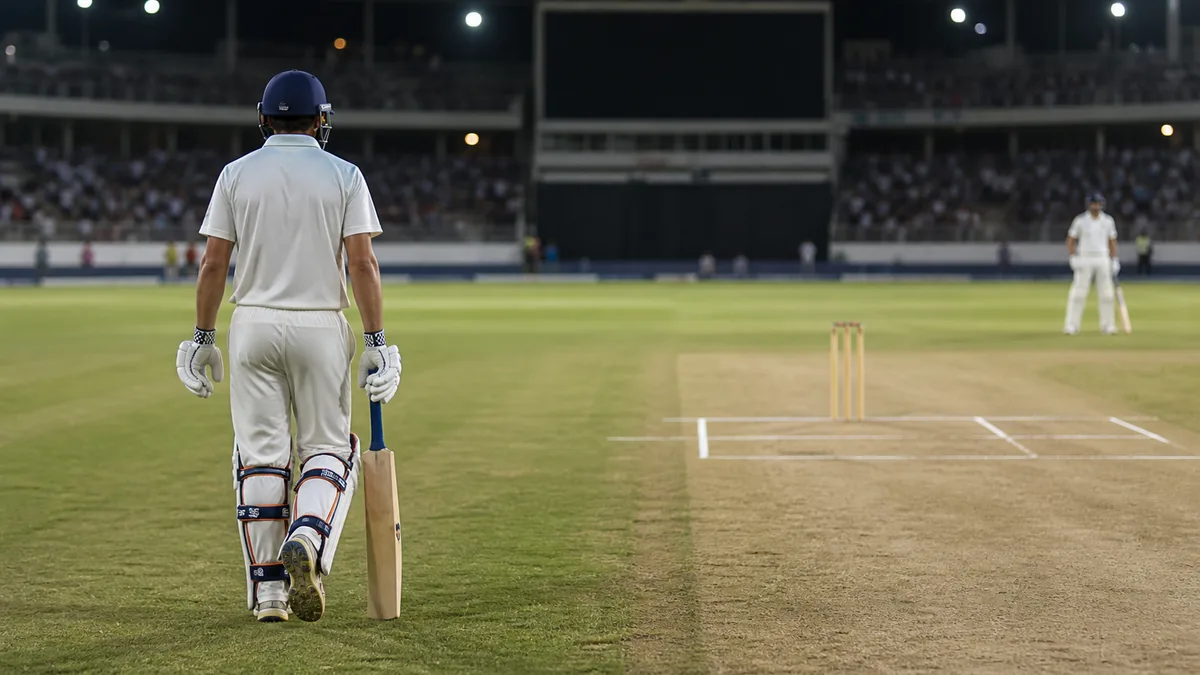
What Is Retired Out in Cricket? Law 25 Explained
Retired out means a batter leaves voluntarily and is recorded out. Learn MCC Law 25, whether the batter can return, and how it differs from retired hurt.
Cricket Ball Hits Batter Rules: what happens next?
When a delivered ball hits a batter, the result depends on whether the ball is dead, whether runs are attempted, whether it is a leg bye, and whether a dismissal or penalty applies. There is no single automatic outcome for every body contact.
Cricket Free-Hit Rules: what the batter may and may not do
A free hit follows the no-ball conditions set by the relevant playing regulations, but it does not make every dismissal impossible. The current competition rules control which no-ball creates a free hit and how the next delivery is treated.