How Many Ways Can You Be Out in Cricket? All 10

On this page7
- 01How many types of out are there in cricket?
- 02All 10 cricket dismissals at a glance
- 03The five dismissals you will actually see
- 04The five rare dismissals almost nobody sees
- 05Which dismissals credit the bowler, and which do not
- 06Why handled the ball vanished from the Laws
- 07How the dismissal rules differ by format
There are 10 ways a batter can be given out under the current Laws of Cricket. Nine of them sit in the dismissal Laws numbered 32 to 40, and the tenth, retired out, is buried inside Law 25.4. Five of the ten are credited to the bowler and five are not, which is why a scorecard and a bowling analysis can disagree about who took the wicket.
How many types of out are there in cricket?
Ten, under the 2017 Code of the Laws as it stands in August 2026. The count trips people up because older reference pages still say eleven. Handled the ball was a separate dismissal until the 2017 Code absorbed it into obstructing the field, so anything written before that lists one dismissal that no longer exists on its own.
The Laws are custodianed by MCC at Lord’s, not by the ICC. The edition in force is the 2017 Code, 3rd edition (2022). A fourth edition takes effect on 1 October 2026 with 73 material changes, none of which adds or removes a mode of dismissal.
All 10 cricket dismissals at a glance
Here is every mode of dismissal with its Law number, roughly how often you will see it, and the detail most explainers skip: whether the bowler gets the wicket.
| Dismissal | Law | How common | Credited to bowler? |
|---|---|---|---|
| Caught | 33 | Very common (~57% of Test dismissals) | Yes |
| Bowled | 32 | Very common (~21%) | Yes |
| LBW | 36 | Common (~14%) | Yes |
| Run out | 38 | Regular (~3.5%) | No |
| Stumped | 39 | Occasional (~2%) | Yes |
| Hit wicket | 35 | Rare (well under 1%) | Yes |
| Obstructing the field | 37 | Very rare | No |
| Timed out | 40 | Once in internationals | No |
| Hit the ball twice | 34 | Once in internationals | No |
| Retired out | 25.4 | Rare, and tactical | No |
The frequency figures are drawn from Test-match records and are stable enough to treat as the shape of the game rather than a snapshot. Limited-overs cricket shifts the mix: run outs and stumpings rise sharply in T20, and LBW falls as batters play across the line less often against spin.
The five dismissals you will actually see
Caught, bowled, LBW, run out and stumped account for more than 98 per cent of everything that happens. Caught covers any ball struck with the bat or glove and taken cleanly by a fielder before it touches the ground. Bowled requires the delivery to put down the wicket, whether it beats the bat or deflects off pad or body first.
LBW requires every part of Law 36 to apply: a legal delivery, a permitted pitching point, body contact before bat, a permitted point of impact, and a projected path into the wicket. If the batter offered no genuine shot, impact can be outside off and still be out. The full LBW guide explains each condition with common ball paths. Run out applies when the wicket is put down while a batter is out of their ground with the ball in play, and it is the only dismissal that can happen to either batter on a single delivery. Stumped is the keeper’s version, executed when the batter has left the crease and is not attempting a run. The keeper role is flexible: a nominated wicketkeeper may later bowl if another eligible player takes the gloves.
If the shorthand on scorecards is unfamiliar, the full guide to cricket abbreviations and their meanings decodes notations like “c Smith b Jones” and “lbw b Jones”.
The five rare dismissals almost nobody sees
Hit wicket (Law 35) is out when the batter dislodges the bails with bat, body or equipment while playing the ball or setting off for a run. Obstructing the field (Law 37) covers deliberate interference with a fielder, including using a hand to stop the ball. Hit the ball twice (Law 34) bans striking the ball a second time except to protect the wicket, and has been given once in international cricket, against Malta’s Fanyan Mughal in a 2023 T20I.
Timed out (Law 40) requires the incoming batter to be ready within three minutes under the Laws, cut to two minutes in Tests and ODIs and 90 seconds in T20Is by international playing conditions. Angelo Mathews became the first player timed out in international cricket during a 2023 World Cup match against Bangladesh when his helmet strap broke. Retired out (Law 25.4) is recorded when a batter retires for a reason other than illness, injury, or another unavoidable cause and does not resume the innings. Our retired-out guide explains the return conditions, scorecard treatment, and tactical use.
Which dismissals credit the bowler, and which do not
Exactly five dismissals go into the bowler’s figures: bowled, caught, LBW, stumped and hit wicket. The other five (run out, obstructing the field, hit the ball twice, timed out and retired out) are credited to the fielding side but leave the bowling analysis untouched.
This is not a scoring quirk. It changes what is legal. A batter cannot be stumped off a no-ball, because stumped is the bowler’s wicket and the fielding side is not allowed to profit from an illegal delivery. A batter can be run out off a no-ball, because that wicket belongs to nobody in particular. The same logic explains why a bowler who beats the bat and watches the keeper break the stumps on a wandering batter gets the wicket, while a bowler whose full toss is smashed to mid-on and turns into a run out gets nothing but the runs against their name.
Why handled the ball vanished from the Laws
MCC deleted handled the ball as a standalone dismissal in the 2017 Code and moved the offence into obstructing the field. The reasoning was that using a hand to stop the ball is a form of obstruction, and two Laws covering one act invited arguments over which applied.
Nothing became legal as a result. A batter who palms the ball away from the stumps is still out; the scorecard simply reads “obstructing the field” now. Michael Vaughan and Steve Waugh are among the players whose old handled-the-ball dismissals sit in the records under a Law that no longer exists in that form.
How the dismissal rules differ by format
The modes are identical across formats, but the tempo changes which ones appear. Test cricket produces the highest share of bowled and LBW dismissals because bowlers attack the stumps over long spells; the format explained in our guide to what a Test match is rewards patience over risk.
Limited-overs cricket does the opposite. Run outs multiply as batters chase twos, and stumpings rise as they charge spinners. The 50-over format covered in our overs guide sits between the two extremes. Every dismissal here can also occur in a tie-break, which is worth knowing before reading how a Super Over decides a tied match: losing two wickets ends a Super Over innings on the spot, whatever mode of dismissal caused them.
For the rest of the rulebook, our cricket rules hub covers the Laws that decide matches rather than individual wickets. For a deeper look at the wicketkeeper category, see most stumpings in cricket history.
Frequently asked questions
How many ways can a batsman get out in cricket?+
Ten. Nine sit in the dismissal Laws numbered 32 to 40 (bowled, caught, hit the ball twice, hit wicket, LBW, obstructing the field, run out, stumped, timed out), and the tenth, retired out, is written into Law 25.4. Older lists say eleven because they count handled the ball separately.
Which is the most common dismissal in cricket?+
Caught, by a wide margin. Across Test cricket's recorded history roughly 57 per cent of all dismissals have been catches, ahead of bowled at about 21 per cent and LBW at about 14 per cent. Everything else combined accounts for well under 10 per cent of Test wickets.
Does a run out count as a wicket for the bowler?+
No. A run out is credited to the fielding side but never to the bowler, so it does not appear in the bowler's figures. The same applies to obstructing the field, hit the ball twice, timed out and retired out. The runs conceded still count against the bowler.
Is hit wicket credited to the bowler?+
Yes. Hit wicket is one of the five dismissals that go into the bowler's analysis, alongside bowled, caught, LBW and stumped. It is scored as "hit wicket b Bowler". The batter does not have to be playing a shot for it to count, only for the delivery to be in play.
What happened to the handled the ball dismissal?+
It was removed as a standalone dismissal in the 2017 Code and folded into obstructing the field, now Law 37. Deliberately using a hand to stop the ball is still out, but it is recorded as obstructing the field rather than handled the ball. The old dismissal survives only in historical scorecards.
How long does a new batter have before being timed out?+
Three minutes under the MCC Laws, but international playing conditions are tighter: two minutes in Tests and ODIs, and 90 seconds in T20Is. Angelo Mathews became the first player timed out in international cricket in a 2023 World Cup match against Bangladesh after a helmet strap broke.
Can a batter be out stumped off a no-ball?+
No. Stumped is credited to the bowler, so the fielding side cannot benefit from an illegal delivery. A batter can, however, be run out off a no-ball, because a run out is not the bowler's wicket. It is one of the clearest signs that bowler credit is a real rule, not bookkeeping.
Has anyone ever been out hit the ball twice in international cricket?+
Only once. Malta's Fanyan Mughal was dismissed hitting the ball twice in a T20 international against Romania in August 2023. It remains unrecorded in Test and ODI cricket, which makes Law 34 the rarest of the ten dismissals at the top level of the game.
Sources
Related rules & terms guides
View all →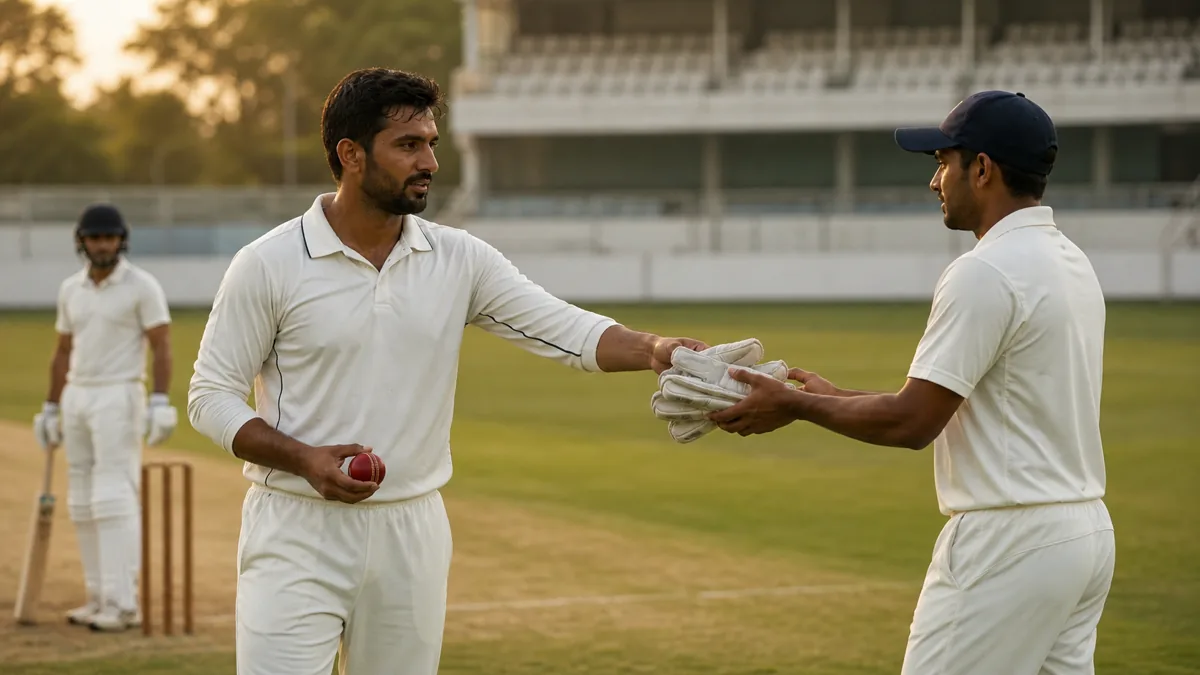
Can a Wicketkeeper Bowl in Cricket? The Rule Explained
Yes, a wicketkeeper can bowl in cricket. See how teams switch keepers, when substitutes cannot bowl, and what happens to the gloves and pads.
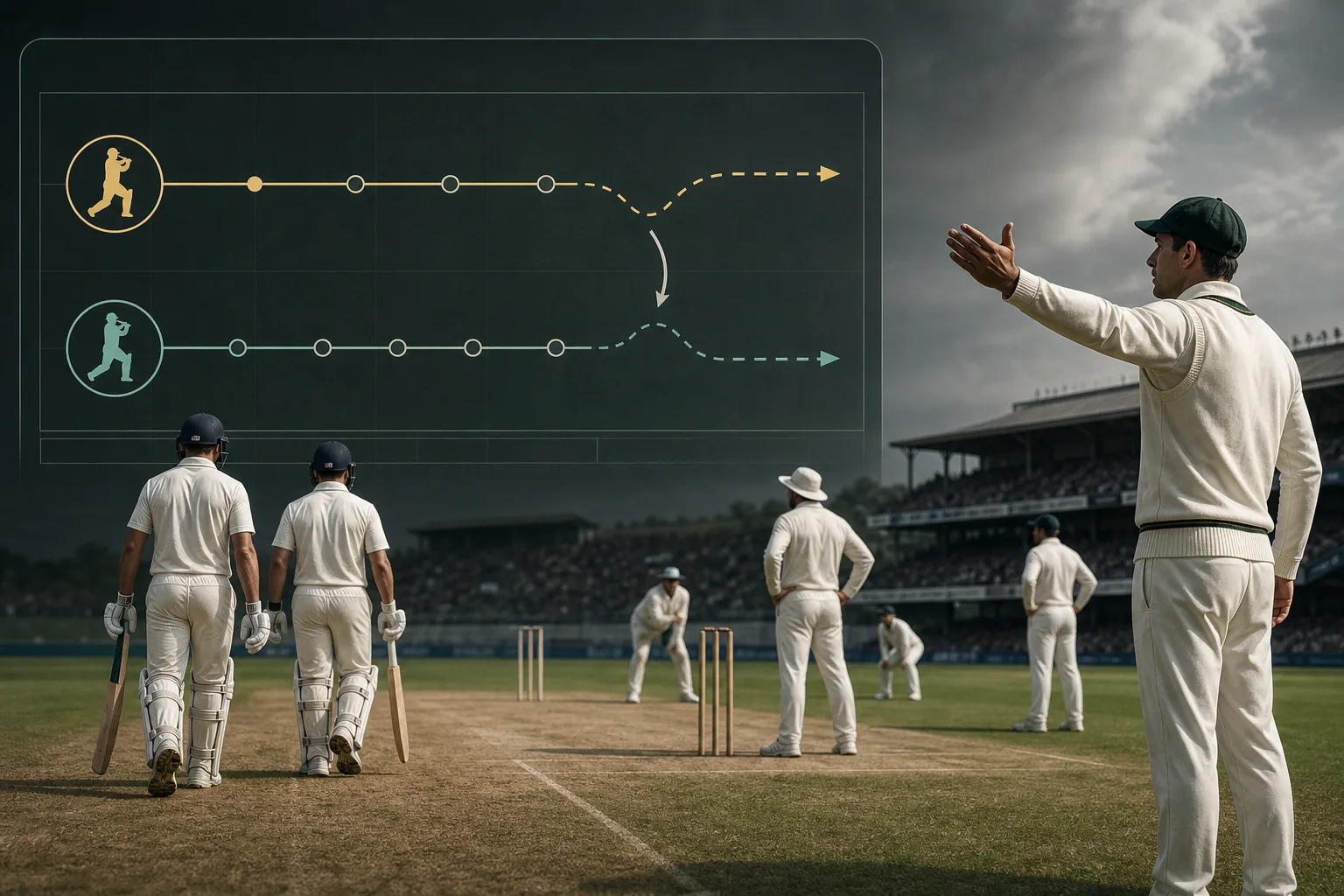
What Is the Follow-On in Test Cricket? Law 14 Explained
The follow-on lets a captain make the trailing side bat again. Here are the 200-run rule, the margins for shorter matches, and when enforcing it backfired.

What Is Umpire's Call in Cricket? DRS and LBW Explained
Umpire's Call keeps the on-field LBW decision when ball-tracking shows a marginal result. Learn what it means, when it applies and why the review is retained.
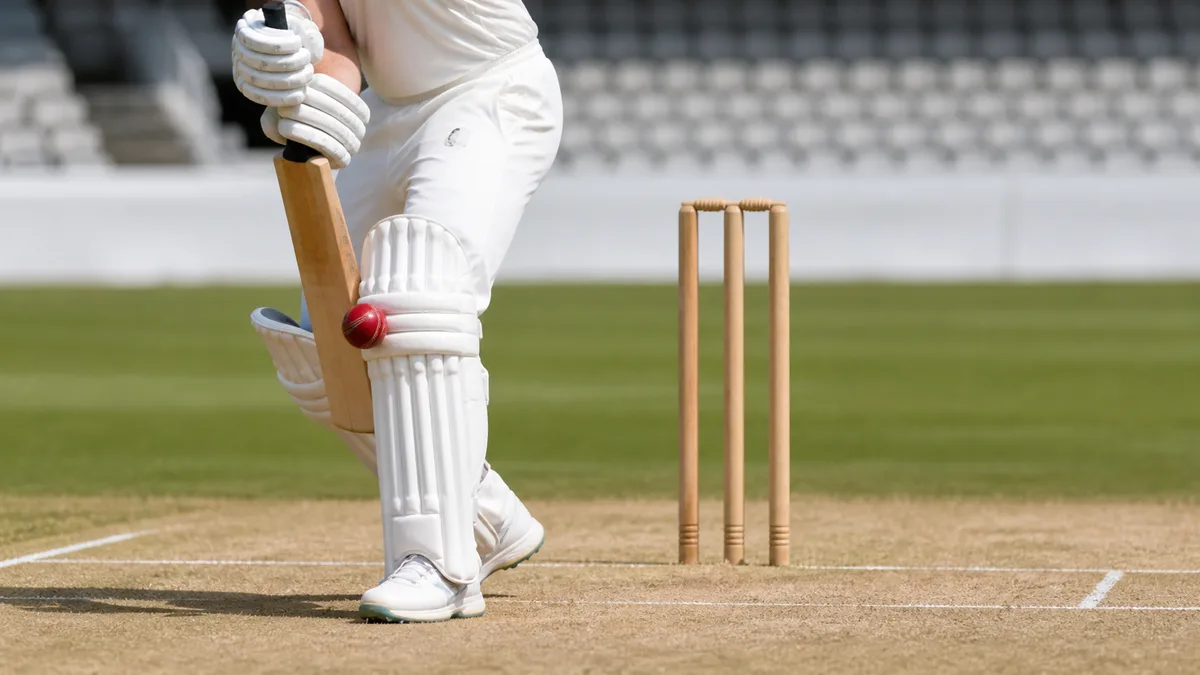
LBW Full Form in Cricket: Leg Before Wicket Explained
LBW stands for leg before wicket. Learn the five conditions in MCC Law 36, when a batter is not out, and how DRS and umpire's call work.
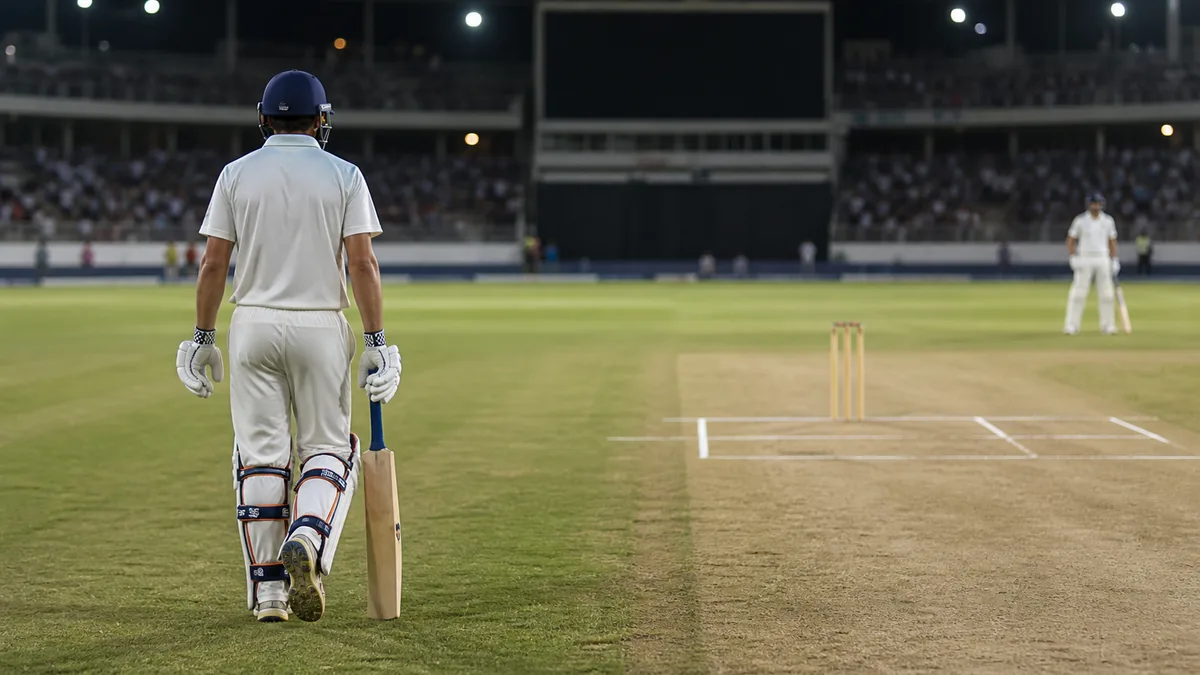
What Is Retired Out in Cricket? Law 25 Explained
Retired out means a batter leaves voluntarily and is recorded out. Learn MCC Law 25, whether the batter can return, and how it differs from retired hurt.
ODI Full Form in Cricket: Meaning, 50 Overs and Rules
ODI means One Day International. Learn its 50-over format, 300 balls, bowler limits, powerplays, DLS rain rules and 60-over history.