Cricket Obstructing the Field Rules: deliberate obstruction explained
On this page6
TL;DR: A batter can be out Obstructing the Field when their deliberate words or actions obstruct or distract the fielding side, subject to the detailed exceptions in MCC Law 37. Intent and the ball-in-play context matter.
This explainer uses the Laws of Cricket and current playing-condition sources. It describes the decision a reader needs to understand, but it is not a substitute for an umpire’s live ruling.
What is the short answer?
A batter can be out Obstructing the Field when their deliberate words or actions obstruct or distract the fielding side, subject to the detailed exceptions in MCC Law 37. Intent and the ball-in-play context matter.
The table gives the decision points to check before applying a general explanation to a specific format.
| Decision point | What to check | Why it matters | Safe action |
|---|---|---|---|
| Intent | The obstruction or distraction must be deliberate | An accidental collision is not automatically out | Use the Law wording |
| Ball in play | The incident must occur in the relevant live-ball context | Dead-ball status changes the analysis | Check Law 20 too |
| Exception | The Laws preserve specific batting actions | Do not simplify the rule to any contact | Read the clause |
| Decision | Umpire and review procedures apply | A replay is evidence, not a new Law | State the competition |
Which Law or playing condition applies?
The source panel starts with MCC or ICC material because those documents define the base framework. Domestic, franchise and school competitions can add playing conditions, so readers should open the current document for the match they are watching or scoring.
What mistake do beginners make?
They turn a short phrase into a universal rule. A free hit, a leg bye, a boundary catch or a timed-out decision depends on the ball status, the format and the exact wording of the Law.
How should an umpire or scorer record it?
Use the official signal, the correct dismissal or extras label and the competition’s scoring procedure. If a replay is involved, record the final decision rather than an early broadcast description.
What should be reviewed before the next season?
Recheck the MCC Law, the ICC or board playing conditions and any relevant clarification. A routine source check can update verification metadata without changing the article date unless the explanation itself changes.
Frequently asked questions
Does one format’s rule apply everywhere?
No. The Laws provide the base, while playing conditions can change details by format or competition.
Can a video clip prove the decision?
It can provide context, but officials apply the current Law and review protocol.
Are all runs scored in the same way?
No. Bat runs, extras and penalty runs have different definitions and signals.
Should a player rely on this during a match?
Use the officials and the published playing conditions for a live decision.
When should the page be checked again?
After an MCC Law update, an ICC or board playing-condition change, or a material clarification.
Bottom line
Cricket rules become clearer when the reader identifies the ball status, the exact Law and the competition’s current playing condition. That is safer than relying on a short social-media explanation.
Related SportsMuntra reading
Frequently asked questions
What is the short answer?+
A batter can be out Obstructing the Field when their deliberate words or actions obstruct or distract the fielding side, subject to the detailed exceptions in MCC Law 37. Intent and the ball-in-play context matter.
Why can the answer differ by competition?+
Playing conditions can add, remove or clarify details around a general Law. The article names the format and points readers to the current official document.
Which source should readers check first?+
Start with the governing body or organiser source listed in the source panel, then check its publication date and competition scope.
Can a search snippet settle a decision?+
No. Search results establish intent. The umpire, organiser and current Laws or playing conditions decide the match.
When should this page be reviewed?+
Review it after an official Law, playing condition, ownership, payment formula or source changes, and at the stated editorial cadence.
Does this page replace professional advice?+
No. Use the qualified official, coach, scorer, tax adviser or ticket provider for a live decision.
Sources
Related rules & terms guides
View all →
Cricket Hit-Wicket Rules: when the batter is dismissed
A batter is out Hit Wicket when the wicket is put down in the circumstances listed in MCC Law 35, including actions connected with receiving or playing the ball. The exact timing and exceptions matter.

Cricket Fielding Positions Explained: A Simple Field Setup Guide
Learn every main cricket fielding position, where it sits relative to the batter and when captains use slips, point, cover, midwicket and the boundary riders.

Most Stumpings in Cricket History: Wicketkeeping Records
MS Dhoni leads the ODI and T20I stumping lists, while Test records require a separate table. Learn how stumpings are counted across formats.
How Many Players in a Cricket Team? 11 on the Field
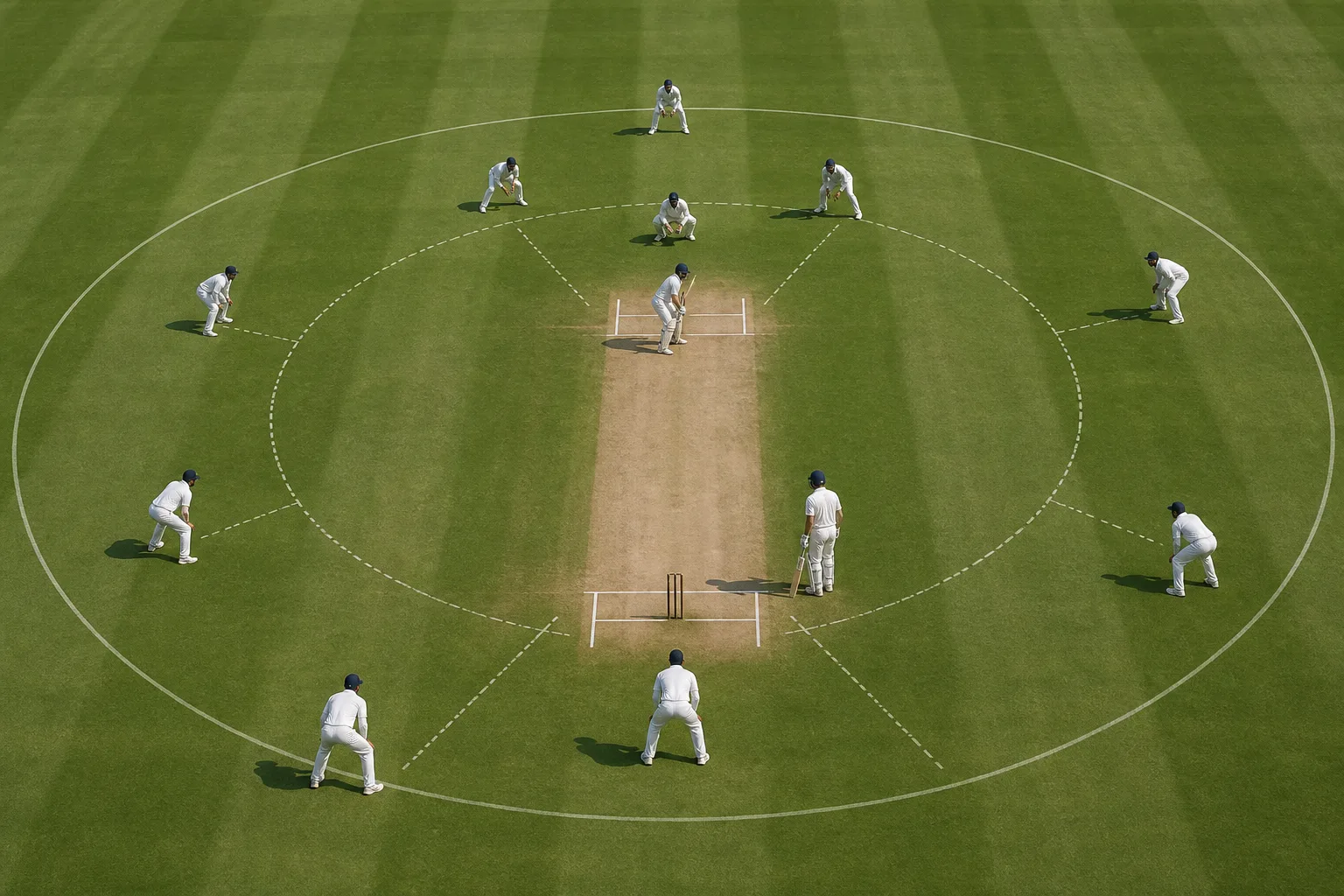
A cricket team has 11 players on the field. Here is the full squad, the 12th man, what substitutes may do, concussion subs and the IPL Impact Player rule.
Cricket Ball Hits Batter Rules: what happens next?
When a delivered ball hits a batter, the result depends on whether the ball is dead, whether runs are attempted, whether it is a leg bye, and whether a dismissal or penalty applies. There is no single automatic outcome for every body contact.

Cricket Non-Striker Run-Out Rules: what Law 38 says
A non-striker can be run out when out of their ground and the wicket is fairly put down while the ball is in play, subject to the current wording and the withdrawal provisions in MCC Law 38. It is a run-out dismissal, not a separate informal rule.